5 “I am the vine; you are the branches. If you remain in me and I in you, you will bear much fruit; apart from me you can do nothing. 6 If you do not remain in me, you are like a branch that is thrown away and withers; such branches are picked up, thrown into the fire and burned. 7 If you remain in me and my words remain in you, ask whatever you wish, and it will be done for you. 8 This is to my Father’s glory, that you bear much fruit, showing yourselves to be my disciples.”
John 15: 5-8
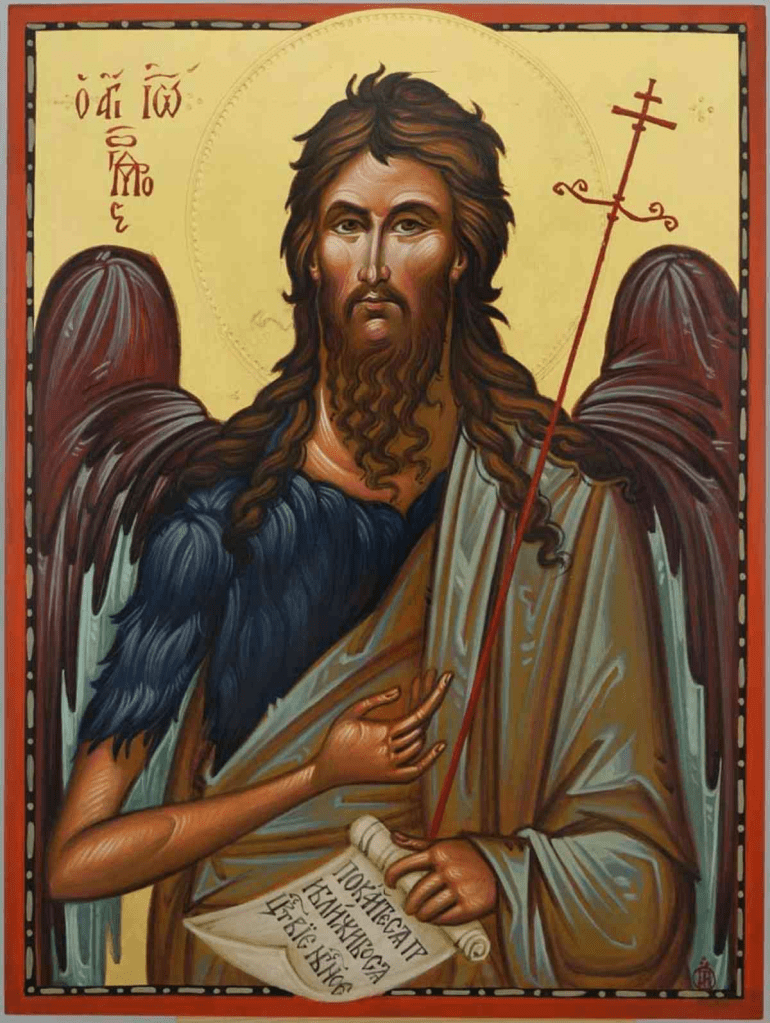
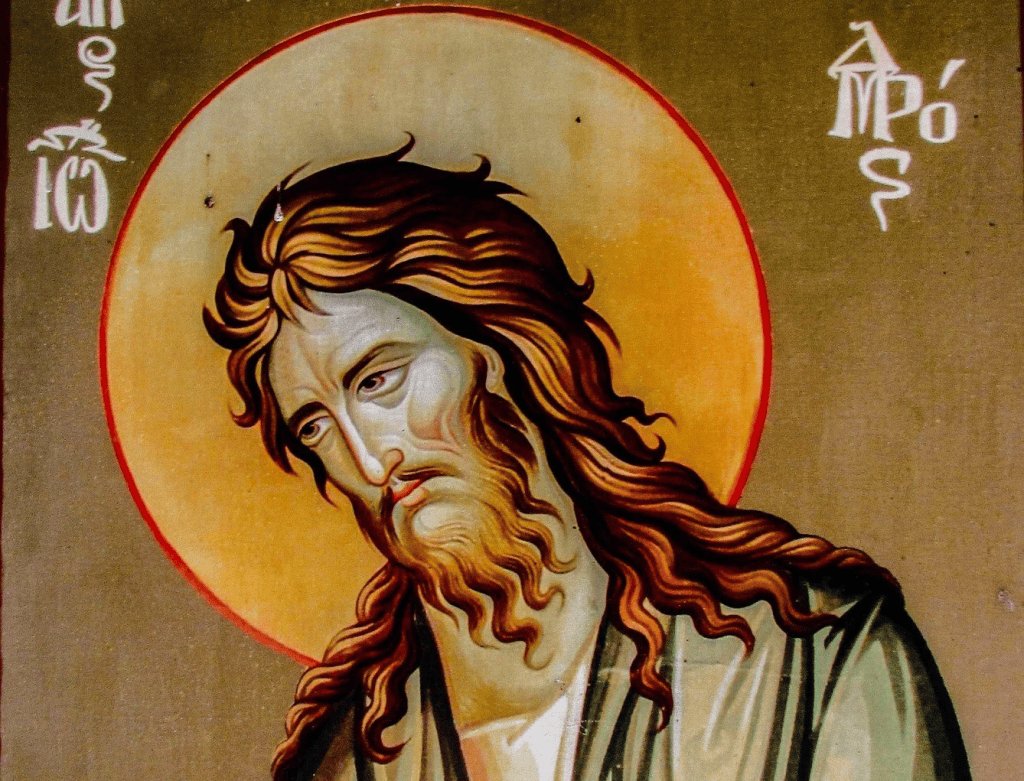
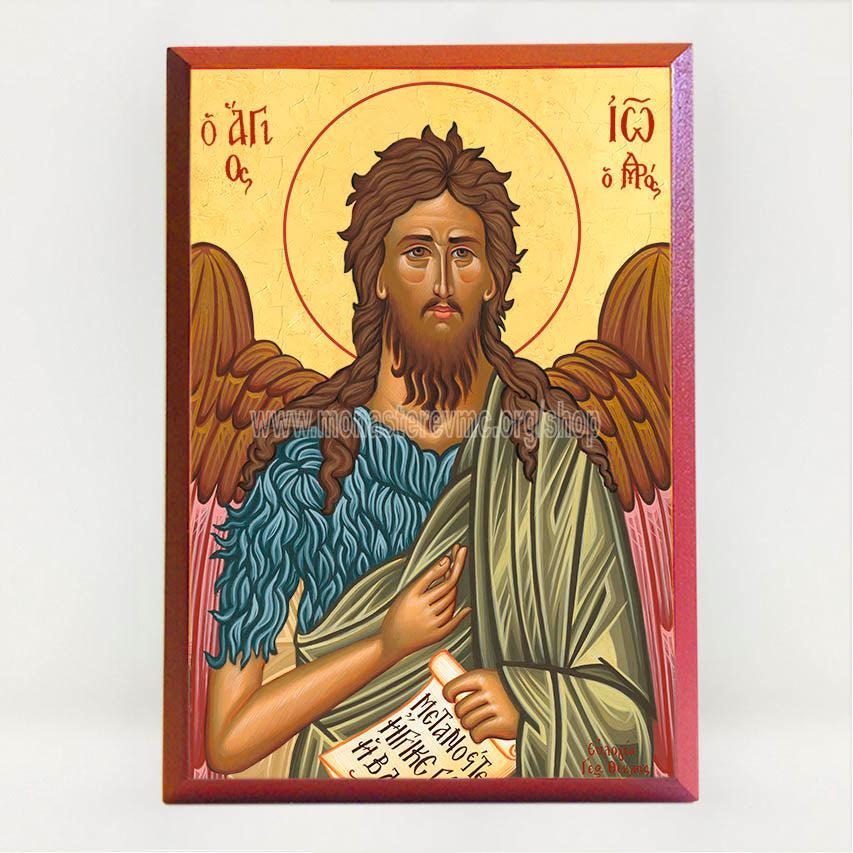
St. John the Baptist, Eastern Orthodox Icon
This entry discusses the metaphor of “The True Vine” from John 15:5-8, highlighting its significance for the early Christian Church and Israel. It portrays the True Vine as a living expression of God’s Covenant — a Covenant which thrived/thrives despite Israel’s corruption. The planting of God’s True Vine occurs in the Wilderness through Jesus’ earthly ministry. This Planting is prefaced by — heralded and prepared for — by John the Baptist. John’s call for repentance emphasizes a shift from rigid traditions towards a renewed relationship with God. The piece argues that John’s baptism serves as a transformative bridge between the Law of the Covenant and the Law of Grace, inviting a renewed encounter with the Most High God.
++++++++++++++++++++++++++++++++++++++++
Review: The Dissolution of Israel’s Plantation-Hope
In the last blog entries, “Christ, The Vine, Parts 1 & 2”, we began to explore the implications of early Christian Church and the late Second Temple’s “Vine” imagery.
The True Vine flourished in a Vineyard planted and cultivated by God. Another name for the Vineyard was God’s Plantation. This Plantation (Greek, phouteia), living under covenant Law, was the earthly site which as could still hold the imprint of God’s Original Plan for Creation. Inherent in this cosmology was the central tenet that the faithfulness of Israel would, as a beacon, draw all the disordered elements of Creation toward it.
In her role as a Light to the Nations, Israel invites All to participate, yet the Nation of Israel is Herself Exclusive: only those whose hearts who have been drawn by a call to live in relationship with the Most High God (El Elyon) are able to enter.
Upon the time of Christ (what we now term the Common Era), this narrative is increasingly no longer sustainable. The Nation has become corrupt: ruled by false kings, compromised by occupying foreign powers with a shell of a Temple serving the power-structure of these elites at its centre, rotting wild grapes now infest the Vineyard. The Word of God has been nullified in order that humanly-derived traditions might be upheld (paraphrase of Matthew 15:6).
As Jesus recounts in the Parable of the Vineyard (Matthew 21.33-44; Mark 12.1-12; Luke 20.89-18), in the name of their control of the Vineyard and its fruit, the Plantation managers undermine the integrity of the Plantation Owner’s (God’s) Planting, ultimately killing the Owner’s Son and Heir (a direct allusion to Crucifixion of Jesus Himself).
Questions to Contemplate:
How can a Nation, compromised to its core, continue to call others into a covenant relationship with God?
If the Nation’s structures have been taken over by hostile powers, where does the True Plantation of God – the True Vineyard and its Vine – now find itself within the world?
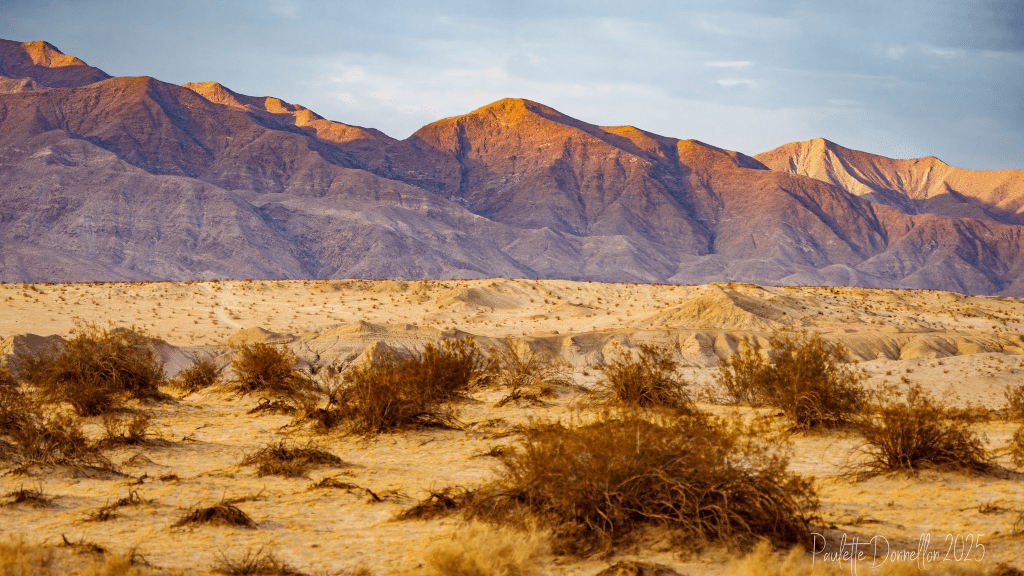
A Call Into the Wilderness
In three of the four Gospel accounts (Matthew, Mark and Luke), Jesus goes out into the wilderness of the desert for 40 days of fasting and prayer to prepare for His ministry (Mark 1: 12-13, Matthew 4: 1-11, Luke 4: 1-13).
What does He meet there?
In the Mark account, Jesus is ministered to by the angels as he lives among the wild beasts of the desert. In the Matthew and Luke accounts, Jesus must overcome the wiles of Satan: He is challenged and confronted by the very temptations that keep the human being from entering into relationship with God — pride, vainglory and power.
Jesus’ 40-day journey into the wilderness is the prototype of all human beings who seek communion with their Father-Creator:
We are all asked to go into the ‘wilderness’, a place set apart from the accomplishments of Man; there, we are invited to let go of our earthly attachments and, in so doing, renounce our delusions (i.e., who we think we are, our self-proclaimed identities upheld by traditions, customs and social rituals); in the wilderness, we will confront our own wayward hearts and perceive clearly where they are misleading us.
In essence: In the wilderness, we have an opportunity to find a clear path – the Way – to walk with and be with God.
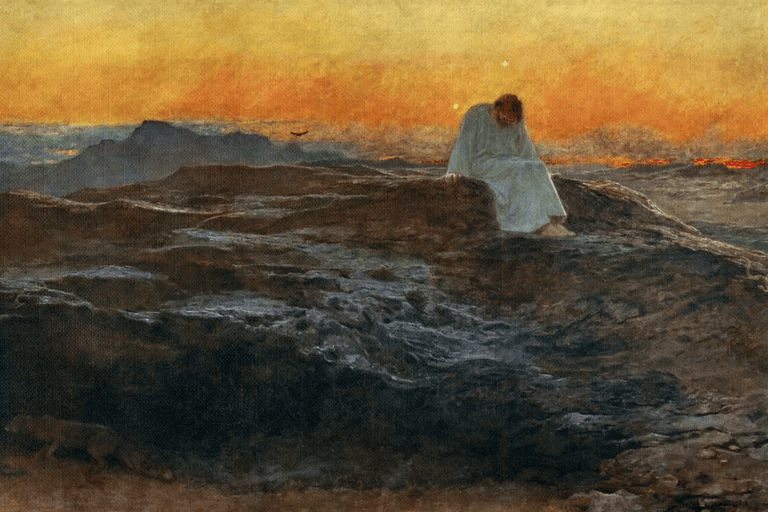
Jesus In The Wilderness, Source Unknown
But this journey into the wilderness was not just Jesus preparing for His ministry, it was also the place in which He was to find the Voice with which to call the renewed Nation of Israel into being. This was the Voice that came into Being as He said No to Satan. It was a Voice that marked a boundary between the Fallen World and the Kingdom of God.
This Voice is synonymous the Voice of the Good Shepherd: the voice which the Sheep recognize (John 10: 27-28). (As Part 4 of this blog will show us, there is a deep connection between the imagery of Christ, The Vine and Christ, The Good Shepherd.)
It is in the calling of the Sheep that the Renewed Vine – the True Vine – is planted for and by God.
Jesus Himself said, “I have come for the lost children [sheep, KJV] of Israel” (Matthew 15:24).
Jesus does not specify who these ‘Lost Sheep’ are/were.
Who were they?
Were they the children of the Lost 10 Tribes scattered throughout the world?
Were they groups who had split off from mainstream Judaism, such as the Samaritans, the Mandeans, (even) the Galileeans?
Were they the Judeans who were shut off, by reason of poverty and purported uncleanliness, from the rites of purification and belonging under the sole proprietorship of the Second Temple in Jerusalem?
Is Jesus also calling the ‘lost sheep’ out into the wilderness-desert? Into a new form of Planting? It appears that the answer is Yes.
Repeatedly in Scripture, we hear how Jesus is critical of and dissatisfied with the current Plantation. Notably in Matthew 15: 13-14, after Jesus has once more had to deal with ensnaring questions directed at Him by the Pharisees, we hear Him tellingly say: “Every plant which My heavenly Father has not planted will be uprooted.”
He continues, “ Let them alone. They are blind leaders of the blind. And if the blind leads the blind, both will fall into a ditch.”
Both leaders and followers of the Old Plantation have lost the Way; they are literally falling off the path into a ditch.
A more radical reading suggests that the guides/leaders of this Nation never had the Way – that they were not even planted by God, the Father!
But Christ says not to bother with these ‘false Vines/planting’; he commands (imperative form) that they be left alone. God, not the human being, is doing the uprooting. And something else, in another time and another place, is being planted by the Plantation-Owner.
The Nation of the Heart: Laying the Groundwork for The Vine in the Wilderness
It is in the Wilderness that Jesus experiences Himself as the Voice calling to the Lost Sheep in the Wilderness: Jesus, the True Son of God (the True Vine), is planted in the Wilderness. But Jesus only goes out into the Wilderness, bearing His Divine Sonship, after He has been named (received the Title of) the Son of God while being baptized in the Jordan River by his cousin, John.
The account is given in Matthew 3: 13-17:
13 Then Jesus came from Galilee to the Jordan to be baptized by John. 14 But John tried to deter him, saying, “I need to be baptized by you, and do you come to me?”
15 Jesus replied, “Let it be so now; it is proper for us to do this to fulfill all righteousness.” Then John consented.
16 As soon as Jesus was baptized, he went up out of the water. At that moment heaven was opened, and he saw the Spirit of God descending like a dove and alighting on him. 17 And a voice from heaven said, “This is my Son, whom I love; with him I am well pleased.”
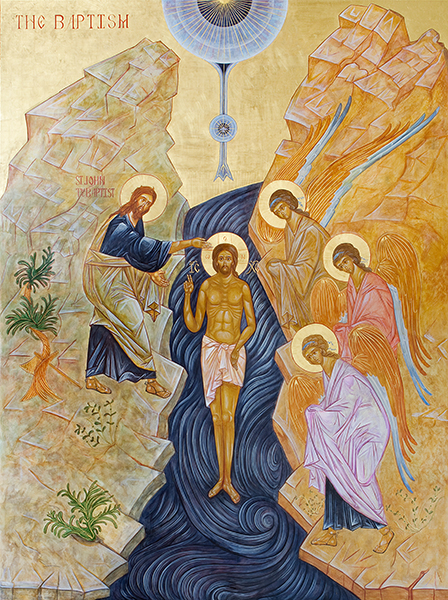
There are Divine reasons why Jesus of Nazareth must be baptized: these have been much disputed in the history of the Church; some of the answers — such as Adoptionism — have been named as heresies by the Orthodox Church.
But let us consider instead: From a human perspective, why must this ritual happen? (Even John himself initially objects to it.) What is the significance of this Someone Else — a Human Being/ a son of man — offering Baptism to Jesus?
The Priestly Role of John the Baptist: Revealing the Presence of God in the Temple of the Wilderness
There is much that could be written about John, known as The Baptist: cousin of Jesus; the son of Elizabeth and Zechariah born to them ‘miraculously’ in their old age. In this last point, John is a type (some might say the fulfillment) of Isaac, the son of elderly Abraham and Sarah; Abraham who left his own country and wandered into the wilderness, in obedience to God, in order that he and his (countless, promised) descendants might be given a New Land.
John was a Priest through and through: his mother was a descendant of Aaron of the Tribe of Levi; his father was a descendant of a line of priests established by King David.
Priests reveal the Presence of God to the Gathering of the People. But, although John’s future seemed to be set for him i.e., to become a Priest of the Temple in Jerusalem, he instead chose to embrace an unknown Future. Although his calling remained priestly (i.e., to reveal the Presence of God), John’s destiny was not to become a priest of a Temple made of stone, bricks and mortar.
There are other legends about John – many of them yet carried in the Syriac Church: how, at the age of 12 (when Jesus was meeting the elders in the Jerusalem Temple), John came of age instead by being sent into the wilderness to live among the beasts. There, feeding upon, not Cain’s food of cultivation and agriculture (which had been cursed, but also commanded, by God at the time of the Fall), but the fare of the hunter-gatherer (wild honey and locust pods), John fully realizes his utter reliance upon God.
John names himself The Voice Crying in the Wilderness (John 1: 23): He said, “I am the voice of one crying out in the wilderness, ‘Make straight the way of the Lord,’ as the prophet Isaiah said.” John’s is the not the Voice that the Sheep recognize. John’s voice is the voice that calls to the lost of Israel in order that they might see themselves as sheep in need of a Shepherd. John himself is the not the True Vine, but he clears the path — makes it straight — in order that the hearts of the uprooted and abandoned might be open enough to find It.
All of this is very significant for John is also a figure of the Exodus – a holy man, set apart by God, who is to help lead God’s people out of slavery into freedom, but who does not himself see the Promised Land.
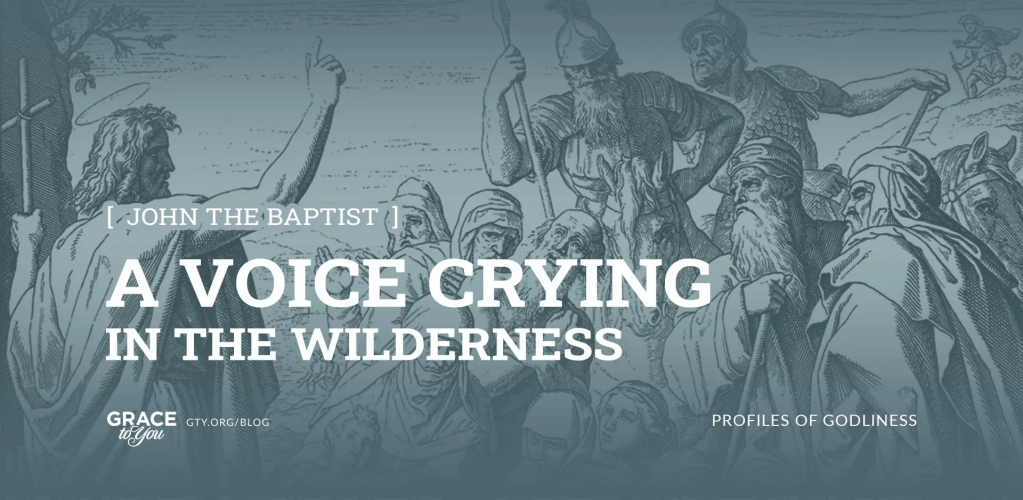
John The Baptist – Prepares the Way of the Lord in the Wilderness
Preparing The Way of the LORD in the Wilderness
In order to consider John, we must develop a mind of allusion (not to be confused with illusion or delusion) and we must ask for a heart that listens for the ‘pattern’ and the hand of God across Salvation History: how are echoes to be heard across multiple Biblical narratives?; how are the practices of Second Temple Judaism being referenced and transformed in the life of John?
There has been much speculative and populist writing about the role and person of John in the past few decades. Quite frankly, much of it is ‘off the mark’. With this blog, I enter into a subject where angels fear to tread — and much will be left out of my exposition (it would require several chapters of a book in order to do it justice).
There are, however, some partial truths in these new-fangled investigations. Why? Because John is a much more central figure in early Christianity than the Church’s later theologians have led us to believe. And he is very much tied to the transmutation of the Plantation/Vineyard of God into the Kingdom of Heaven.
Jesus himself says of John:
“Truly I tell you, among those born of women there has not risen anyone greater than John the Baptist; yet whoever is least in the kingdom of heaven is greater than he.” Matthew 11: 11
If we go back to the early centuries of Church, we hear, in the voices of those like Clement of Alexandria (150-215 CE) and Origen (185-254 CE), that John is a very necessary transitional figure without whom there would have been no founding of a revitalized Nation of Israel – without whom there would have been no movement from the Law of the Covenant (shown by the corruption of Israel to be unable to upheld) to the Law of Grace. In other words, without John the Baptist, there could have been no preaching and embodiment of God’s Kingdom in and through Jesus Christ. These are significant – astounding – claims.
The Orthodox Church currently teaches that, just as Mary was the perfect-woman of the Old Covenant, John the Baptist is the perfect-man – a truly holy man, faithfully obedient to the letter of The Law. John is the paragon of the Righteousness of Israel: from among those born of Woman (those born within the Womb of the Nation), John is, as Jesus said, the greatest who has risen among them.
(To this day, in recognition of John’s moral fibre and righteousness, St. John’s Tide – the four weeks following the Feast Day of St. John the Baptist (i.e., June 24th) – is, in some Christian communities, a time to focus on personal righteousness, moral development and cultivation of conscience.)
In this light, the wording of the spontaneous hymn of praise which his father Zechariah utters upon John’s birth (Luke 1: 68-79, known as The Canticle of Zechariah by the Church) becomes clear.
Blessed be the Lord,
The God of Israel;
He has come to His people and set them free.
He has raised up for us a mighty Saviour,
Born of the house of His servant David.
Through His holy prophets He promised of old
That He would save us from our enemies,
From the hands of all who hate us.
He promised to show mercy to our fathers
And to remember His holy Covenant.
This was the oath He swore to our father Abraham:
To set us free from the hands of our enemies,
Free to worship Him without fear,
Holy and righteous in His sight
All the days of our life.
You, My child shall be called
The prophet of the Most High,
For you will go before the Lord to prepare His way,
To give his people knowledge of salvation
By the forgiveness of their sins.
In the tender compassion of our Lord
The dawn from on high shall break upon us,
to shine on those who dwell in darkness
And the shadow of death,
And to guide our feet into the way of peace.
In his Righteousness, John calls the Nation of Israel (before it has yet recognized the Son of God in its midst), like Abraham and Moses, out from its fallen cities into the wilderness. John calls all Judea and all Jerusalem to come into the Judean wild lands, to repent of their sins, and to be renewed and restored to Right Relationship with God.
One must respond to the call – a call within the heart. “The contrite heart God does not despise” (Psalm 51:17).
John is the voice crying in the wilderness that calls the Nation to a New Point of Gathering in order that they might have an encounter with God in their hearts. This is a ‘Jerusalem’ without walls.
Once the people with ears to hear respond, John performs a cleansing ritual with them and upon them which came to be known as Baptism.
Someone – a representative of the highest in the Old Covenant – had to lead people out into the wilderness to be reconciled with God.
Someone had to show them the gathering place through which they will be set upon the path to the heart of the LORD.
John’s Baptism of “Repentance”? What Was It?
Baptism itself is not referred to in the Old Testament. We hear about mikveh – ritual purification in the Old (First) Testament.
By the time of Christ, these rites often took place in specially-constructed cisterns, fed by springs or streams, with steps leading down to them. They were meant to be for everyone (men, women; monied and poor), but increasingly in Christ’s time, designated mikveh were for men only – often for men of a specific learned class. As but one example of this, the Essenes’ ritual mikveh, in the Dead Sea region, were shut away from the world. Women, post-birth, who could not afford the Temple taxes/tithes, were often forced to purify themselves in streams and rivulets that could not be properly prepared according to the traditions of the Jewish faith.
The Story of the Pool of Bethesda (John 5)– a story of man waiting 38 years to be healed of his paralysis, lying by the side of a pool and unable to get in first in order to receive healing – is perhaps, in addition to being an event that actually occurred, a metaphorical critique of the exclusivity that had crept into these rites of purification.
(Jesus’ actions at the Pool of Bethesda indicate that He is rendering irrelevant the excluding tradition of ritual-purification observance: Jesus does not make the paralytic enter the vaunted waters to be healed; He simply asks the man if he wants to be healed and then says, “Pick up your mat and walk”.)
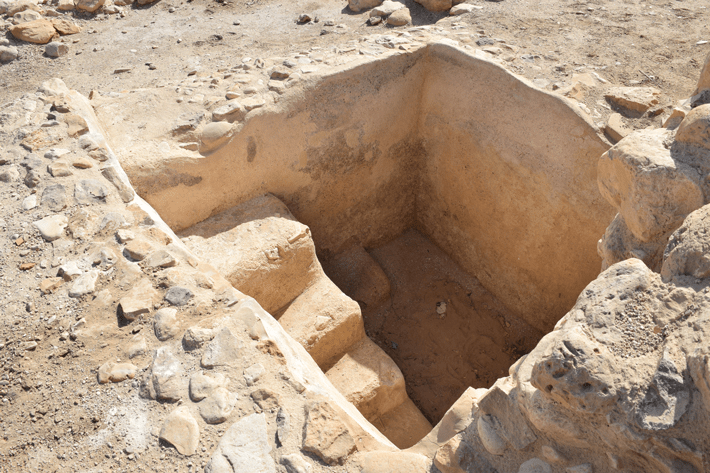
1st-century BCE Mikveh found near the site of the discovery of the Dead Sea Scrolls
While John’s Baptism does bear resemblance to Jewish ritual purification and emulates some of its aims, it is also fundamentally different than ritual purification: 1) it is performed in the open without attachment to a particular learning or secluded religious centre; 2) it takes place, not just in a cistern fed by fresh water, but in Living (i.e., flowing) Water itself. The most famous of John’s baptisms, the Baptism of Jesus, took place off the eastern side of the Jordan River (in present-day Jordan).
John resorts to a form of purification that women, excluded from Temple structures, had been forced to adopt by the early Common Era. In so doing, he resets the covenant-picture, placing it in a venue beyond the taint and the reach of man-made Tradition; preparing the Nation for its Lord. Clement of Alexandria saw John’s baptism as a preparation for spiritual illumination, functioning as a precursor to the true perfection and divine grace offered by Jesus.
The Kingdom of God in All of Creation
John is the Prototype of the many saints and figures in the Christian Story that help gather the People for the establishment of the Kingdom of God in ‘wild places’.
Once they are gathered through Repentance to meet the Light, the ‘wild places’ are then available to respond to God’s Voice. Witnesses relate how these ‘wild places’ respond to God’s invitation to come under His Rule – a Rule of Love. These ‘wild places’ are deserts; they are dumb beasts made monsters by the fear of Man; they are the savage terrain of our own hearts. These ‘wild places’ become the ground of the New Plantation; they become the soil (the Nation) for Christ.
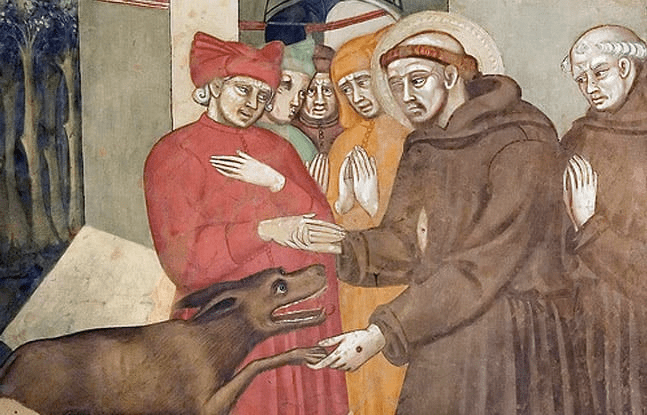
St Francis and the Wolf of Gubbio

St Ailbe of Emly, Cashel Ireland
We see these wild ones responding the Voice of The Good Shepherd/The True Vine/ Christ in the story of St. Francis with the Wolf of Gubbio. We hear it in Western Church among the Irish saints such as St. Ailbe (Elvis) and the Wolf, and in the East with St. Seraphim of Sarov and the Bear. The beasts are brought to their LORD through the Way-Makers, the Saints.
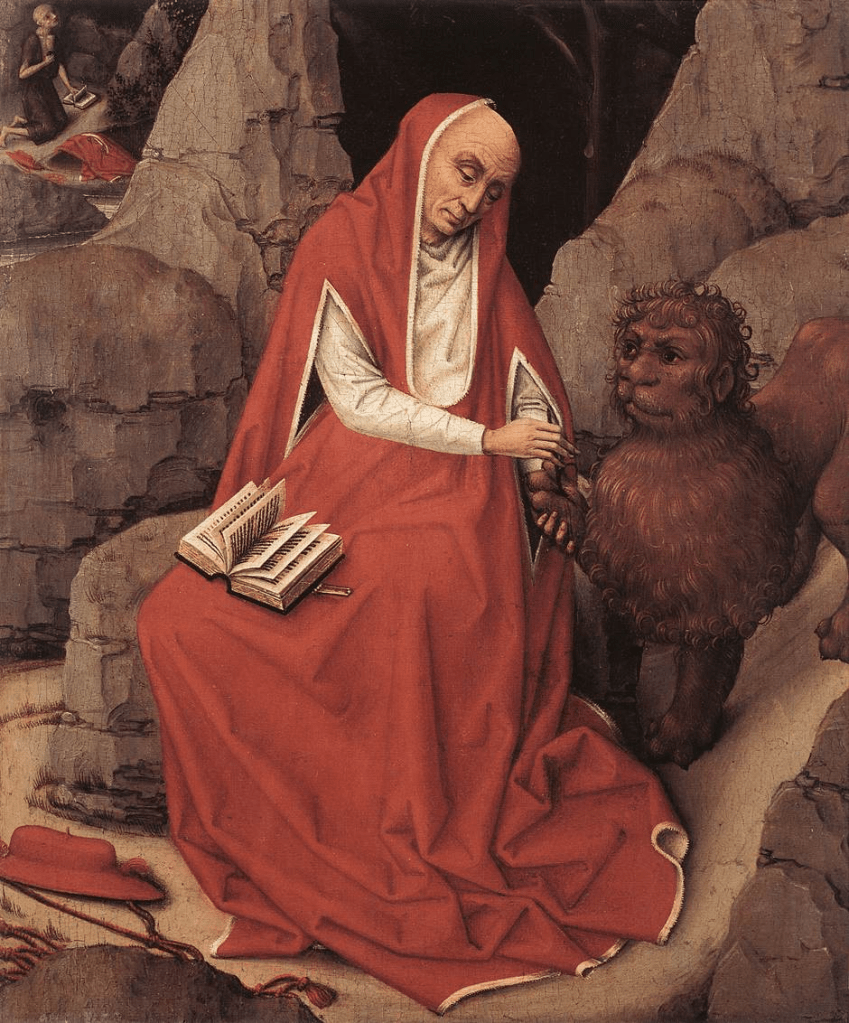
St Jerome and the Lion
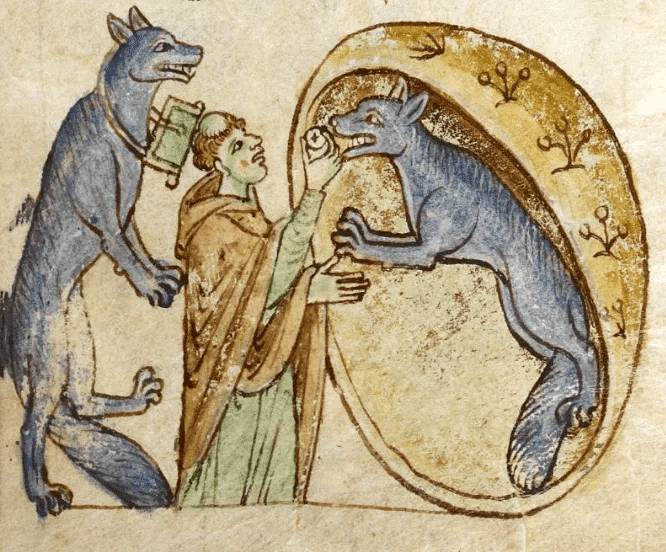
St Patrick and the Ossory Werewolves
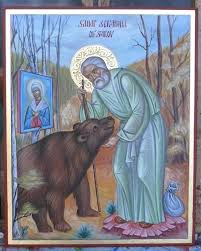
St Seraphim of Sarov and the Bear
The wild place turns toward God through the actions of a Servant who has asked for the grace to become an instrument of God’s Will; to be a carrier – an amplifier – of the Voice that calls to the Lost Sheep. The words of John the Baptist reveal the nature of the sacrifice which such a vocation entails: “He must increase; I must decrease” (John 3: 30). It is in this diminishment that the pathways (to God) are made straight in the desert.
John’s statement – his manifesto – is completely counter-cultural in a time which values self-realization and actualization above all; which values the identities we have constructed for ourselves and which ignores our deeper Identity in God.
Christians — the Saints — are called to be as John the Baptist – the highest representative of Nation that is to be undone (remade, planted anew) while at the same time being fulfilled. All Christians are asked to participate in this ministry and mystery: to be the Instrument to be played (“the greatest among those born of Woman”) and to be the sheep to be gathered, as soil for the Plantation, into the New Kingdom (“the least person in the Kingdom of Heaven is greater than John”) (Matthew 11: 11).
Questions to Ponder….
What is the nature of this New Kingdom in which God’s Planting will, has and does take place?
How does it stand alongside and transform the other Nation? The Nation of God’s Covenant?
How is Christ calling us into Union/Communion with the Vine of His Planting?
How do we participate within and for it?
To these questions we will turn in Part 4 of this blog.

