5 “I am the vine; you are the branches. If you remain in me and I in you, you will bear much fruit; apart from me you can do nothing. 6 If you do not remain in me, you are like a branch that is thrown away and withers; such branches are picked up, thrown into the fire and burned. 7 If you remain in me and my words remain in you, ask whatever you wish, and it will be done for you. 8 This is to my Father’s glory, that you bear much fruit, showing yourselves to be my disciples.”
John 15: 5-8
Review: God’s Exclusive Covenant-Plantation with Israel
In the last blog entry, “Christ, The Vine, Part 1”, we began to explore the implications of early Christian Church and late Second Temple Judaism “Vine” imagery.
This Vine, which yielded good fruit (i.e., grapes good for wine and for salvation), grew in a Vineyard planted by God. The Vine grew within God’s Planting – literally, His Plantation (phouteia, Greek) – a place secured for Good Production and flourishing of Life under the wise rule and control of its Landlord/Planter, the Most High God (i.e, El Elyon). Wisdom (Sophia, Greek; Hokhmah, Hebrew) was El Enyon’s handmaiden, assisting Him in establishing and teaching the Good Order of this Plantation/Vineyard to God’s People, Israel.
The boundaries of the Plantation held back the forces of Chaos, Dissolution and Evil which lived outside the overt-accepted Rule of God, i.e., outside the covenant. God’s covenant with the People secured their safety in both physical and spiritual ways: it secured their salvation and sustained their very life.
This narrative upheld Hebrew civilization. It elaborated a limited-scale Biblical Cosmos in which the People collaborated (co-laboured) with God to order the world.
The True Nation’s Divine Order draws other nations toward it. This Hebrew covenant is inherently proselytizing: through the faithfulness of Israel, the disordered Creation will come within its bounds – and all will truly belong to God once again, live under His Law, worshipping Him in the Temple dedicated to God at its centre.
This redemption of the Creation would not happen through forced conversions. The phrase “there is no compulsion in religion” is Jewish in origin (first recorded in the 2nd-century CE, and then taken up by the Christian Church, by Sts. Athanasius and Maximos the Confessor).
Although radically invitational, this Nation is not wide-open to the world: accordingly, the imagery of the All-Embracing World Tree is not appropriate here; the image of the single Vine is appropriate. The Nation invites All, yet the Nation is Exclusive: only those whose hearts who have been drawn by the Most High God are able to enter.
Questions to Contemplate:
How do we square this discriminating Vine of Christ with the All-Embracing image of Christ that many of us have been raised with? How do we square it with the “Radical Hospitality”/Radical Inclusiveness of present-day Vatican parlance?
The Dissolution of Israel’s Plantation Hope
By the time we get to the early Common Era, however, this Light of the Nations narrative has begun to wear thin. Even in I Isaiah (specifically Isaiah 5: 1-17), written most scripture scholars agree (as early as ) in the eighth-century BCE, we hear of rotting and useless wild grapes having infested God’s Vineyard (see Part 1 of this blog post). These are seen as a metaphor for the sins of injustice and, most importantly, unfaithfulness committed by Israel and their religious leadership.
By the time we get to the Maccabean Period (167-142 BCE), there is still hope that the Vineyard – the Plantation of God – might be established through Israel. In 1 Maccabees 14:8, recounting the time of Simon Maccabee (142-135 BCE): “the land had peace… everyone sat under his own vine and fig tree” (1 Maccabees 14:8).
This hope fades dramatically as the corruption of the Hasmonean ‘Heroes’ becomes painfully evident. Examples of their corruption include: abuses of power; kingly claims to religious authority and high priesthood; the killing of fellow Jews, including murderous rampages on the Pharisees. Ultimately, the Hasmoneans, no holy order, are defeated by Herod the Great (in collusion with Rome) in 37 BCE – and that brings us to the era of Christ.
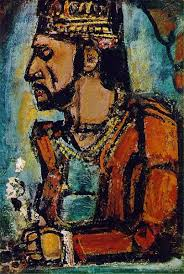
Georges Rouault’s The Old King (1916-1936): depicts the melancholy and dissipation of debauched and tired rulership. Did Rouault use King Herod the Great as one of his models for this masterwork which took Rouault over 20 years to complete?
The Christian Gospels Critique “The Plantation of Israel”
Matthew 21: 33-46
Mark 12: 1-2
Luke 20: 9-19
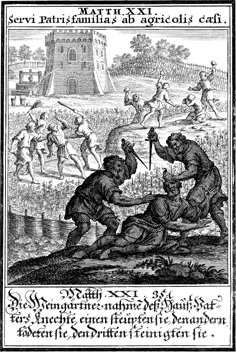
Lutheran Gospel, early 17th-century, The Parable of the Wicked Tenants [woodcut]
These are the three ‘tellings’ of the Parable of the Wicked Tenants as related in the all three (so-called) Synoptic Gospels. Jesus Himself is said to have spoken this parable. (In Red-Letter versions of Scriptures, this parable’s text appears in red.) He speaks it to religious leaders in Jerusalem in the week prior to His Crucifixion.
This blog will does a disservice to the subtle differences in the three tellings of the parable, but I will summarize the story here:
A man [anthropos (Greek)] plants a beautiful Vineyard, pleasing to the eye and productive; protected by stone walls/fences and a watchtower. The landowner [kyrios, Greek] or Lord leaves the Vineyard [to go where?]. Upon leaving, he leases the Vineyard to tenants. Some time passes, and, at the time of ripeness-harvesting, the landowner sends some servants to collect fruit from his leased Vineyard. The tenants do not surrender the fruit to the servants: instead, the tenants beat the servants, sending them away empty-handed. Going one step further in their rebellion, the tenants also kill some of the servants. This atrocity happens several times. At last, the landowner decides to send his Beloved Son and Heir to collect the fruit: the landowner says to himself, “Surely the tenants will listen to him.” But the tenants do not. And they kill the landowner’s Son as well. At this last horrific crime, the landowner gives up on the tenants of the Vineyard: he annihilates them, bestowing his beautiful Vineyard upon another people.
Most scripture scholars agree that the tenants described in the parable are Israel’s leaders who reject God’s Prophets (the servants in the parable) and ultimately Jesus/Yeshua (the Beloved Son and Heir). God [by what name is this God known?; he is referred to as Kyrios, Lord, in the parable] is the landowner. The Nation of Israel is the Vineyard.
We need to be cautious in interpreting this parable as it has been used to undergird Christian anti-semitism over the millennia: it is the groundwork for much Replacement Theology (i.e., that the Christians, not the Jews, are now the Chosen People of God; that the Christians have taken ownership of the Vineyard, of God’s Plantation). But is this really the point of the parable?
This summary skips over a very important feature of the parable in all three of its versions: i.e., Jesus’ quoting of Psalm 118 –
“The stone the builders rejected has become the cornerstone.”
Jesus, the Beloved Son and Heir, does not refer to Himself as a Vine, but as a Stone – The Cornerstone, the foundation of the enclosure of the Chosen People.
In other words, the Plantation-enclosure – the Vineyard Edifice – has a very different foundation than the hearers of the parable think.
They – the Jews in the first telling of the parable; the Christians in the contemporary Gospel telling of the story – might think that they and their ‘choseness’ – their covenant – is the foundation. But this is not the case!
It is, and always has been, the Beloved Son and Heir who is the Foundation – and He has been rejected from the very beginning! And, as I will argue in later parts of this blog, continues to be rejected.
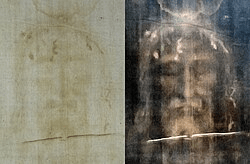
He, as Beloved Son and Heir, is known in the Scriptures as the Son of God.
But he is also, tellingly, known and called by those who have been cast out from the Plantation fold, as:
The Son of David – the promised heir to King David’s throne
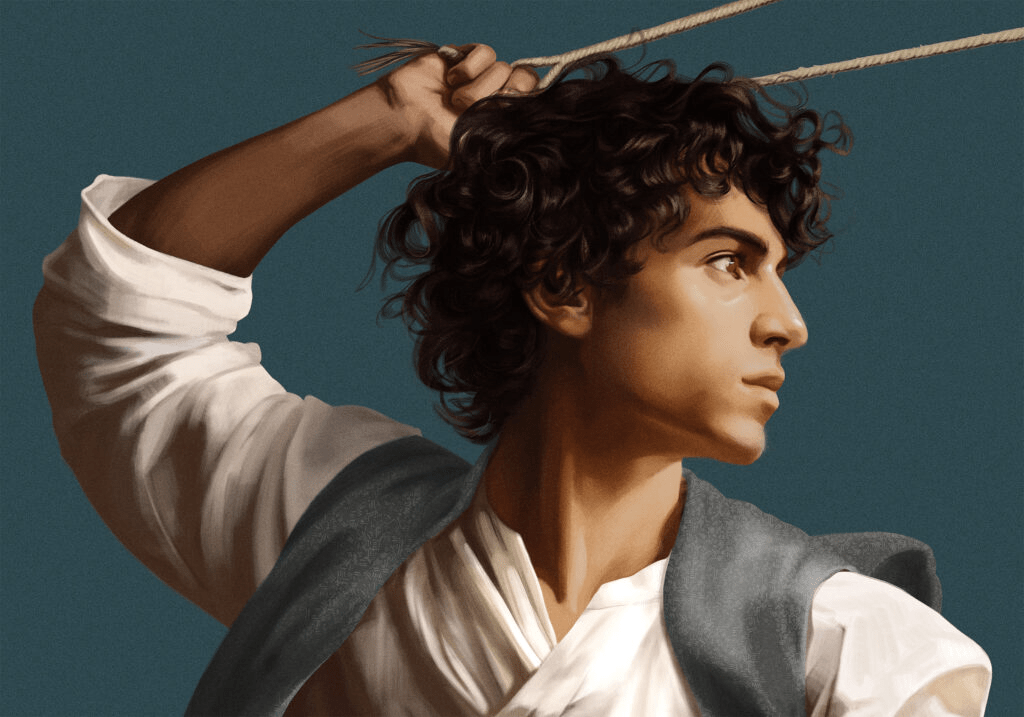
King David: for who would have thought that one such as this might have been King of the Nation?
He is called as such:
By The Blind Men: Matthew 9:27; Matthew 20:30
By The Canaanite Woman: Matthew 15: 22
By The Crowds that Greet Him as He enters Jerusalem riding on a donkey: Matthew 21: 9, 15
By The Children in the Temple: Matthew 12:23
&
As Son and Heir, He is also named
The Son of the Most High God (El Elyon) – the Name of God to be used to indicate God’s sovereignty, power and authority over all of Creation and over all other gods.
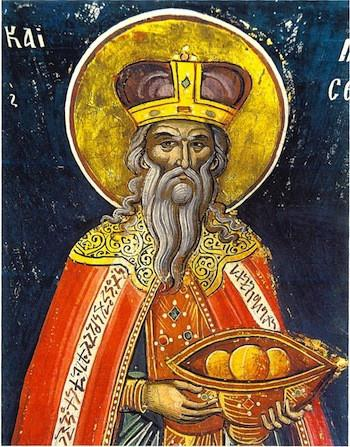
Melchizedek: for who would have thought that one such as this might have been King of the Nation?
He is called as such:
By the Demon-Possessed & by the Demons: Mark 5:7 and Luke 8:28.
This El Elyon is the Name for God used by the Righteous Melchizedek, the Priest-King of unknown Nation and Origin – “the King of Salem” – who greets and blesses Abram upon Abram’s return from the defeat of Kedorlaomer and the kings who were with him (Genesis 14: 17-24).
We will return to the significance of these Son Names in Part 3 of this blog.
Son of David? and/pr Son of the Most High God?: Whose Nation? Whose Throne Is This?
There is tension here in these Names: tension between the heir of a particular throne to a particular Nation and the heir of a God who claims authority and kingship over all (a throne in and of the Universe). Within that tension we can hear that there is still the exclusivity of a Community set apart for God; there is the potential Inclusion of All That Is within its bounds.
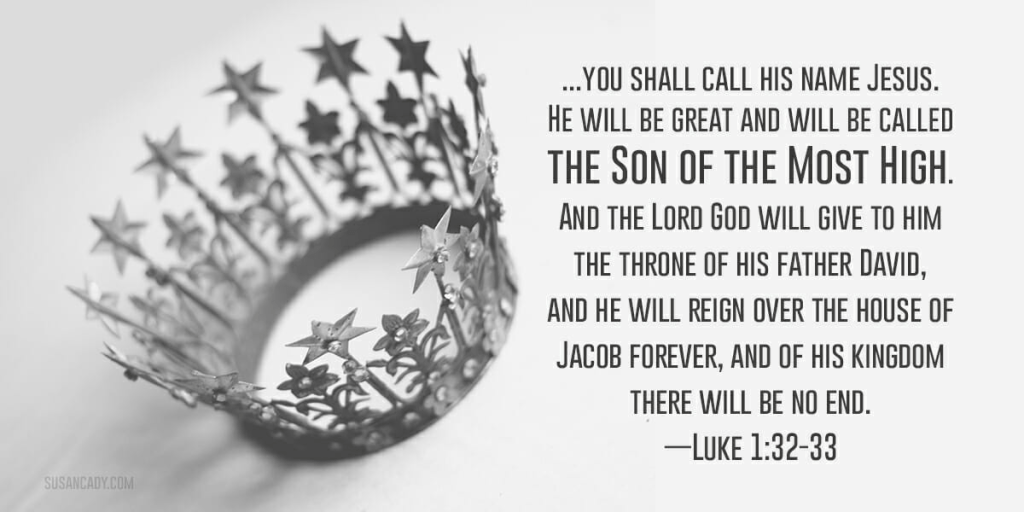
With these Sacred Names, the Subject of Jesus-Yeshua’s Verb (i.e., the saving action of God) is revealed:
He is the Heir above all Heirs; the inheritor of all power and authority over Creation; the Beloved who is capable of setting all Boundaries and the foot and root of all Walls.
As it says in the Letter to the Hebrews (KJV):
“God, who at sundry times and in divers manners spoke in times past unto the fathers by the prophets,
2 hath in these last days spoken unto us by His Son, whom He hath appointed Heir of all things, by whom also He made the worlds.” [my emphasis]
With the coming of Christ, the Plantation continues to exist, but it exists – as a boundaried entity-reality – only through the Heir. This existential fact was always the case, but now this Truth has been revealed. The only Way that a “Plantation of God” exists is through the Beloved Son, the Heir of all things: not through the Jews, not through the Christians, not through any particular Nation. The Plantation of God continues to invite the World into its bounds – it continues to be a Lamp for the Nations – but it is not to be confused with a Nation itself. The Nation of Israel – Jewish or Christian – are the stewards, not the cause of the Holy City on the Hill.
So where will the Vine that produces Good Fruit, if not held by a particular Nation, now be found?
End of Part 2….
This blog, “Christ, The Vine” will be continued with Part 3.
In Part 3, we will explore the location – the epi to auto – of the Vine; and the nature of the Vine’s tending.
In Part 4, we will consider the Fruit that this Vine produces; and how that Fruit is also the Fruit of Salvation and plays a role in the Redemption of Creation.
All these reflections are meant to challenge our traditional understandings of that central Christian image, Christ as the True Vine; to reclaim it for the sharing of the Gospel (Good News) of Christ. For too long, this life-giving Gospel image has been conflated with others. As future blog entries will show, it has been confused with an imperial project – a project to claim and dominate the World under a particular banner (ensign); ironically, a banner which often, especially in recent years, claims Compassion and Inclusion as its by-words.

